


E20 or Premium Petrol? Understanding Ethanol Blending in India's Fuel Market
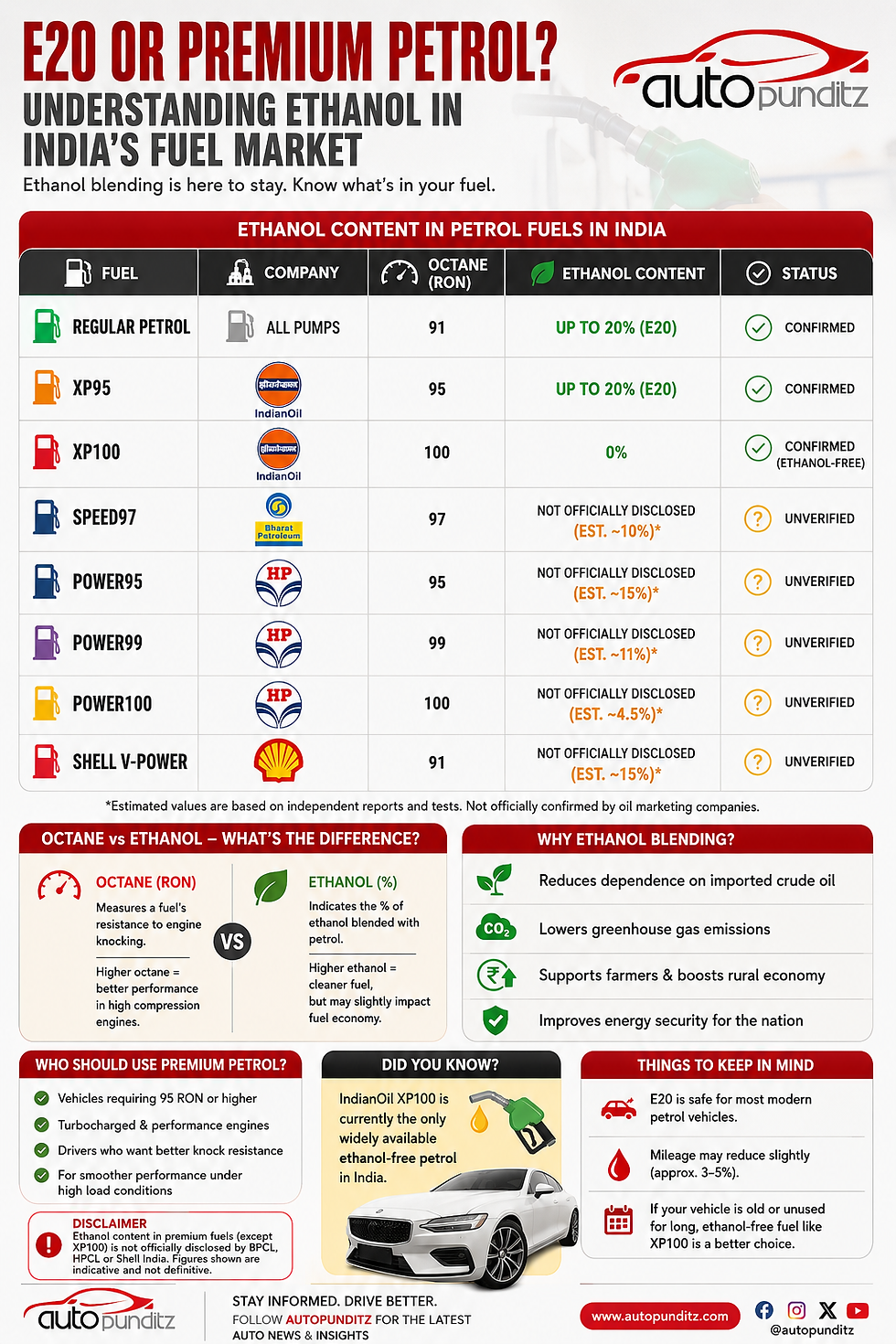
India's transition towards cleaner fuels has made ethanol-blended petrol a part of everyday life. With E20 petrol now becoming the standard across the country, many motorists are wondering whether premium petrols such as IndianOil XP95 and XP100, BPCL Speed97, HPCL Power95, Power99 and Power100, or Shell V-Power contain less ethanol than regular petrol.
The answer is more nuanced than many believe. While octane ratings often dominate marketing campaigns, ethanol content is a separate aspect altogether. Here's a detailed look at how ethanol blending works and what consumers should know before choosing their next tank of fuel.
India's E20 Journey
India has aggressively expanded its ethanol blending programme over the past decade to reduce dependence on imported crude oil and lower vehicular emissions. The government achieved the milestone of 20% ethanol blending (E20) ahead of its original target, making E20 petrol the default fuel available at most retail outlets.
This move is expected to save billions of dollars in fuel imports annually while supporting India's sugar and agricultural industries through increased ethanol production.
Ethanol vs Octane: Two Different Things
One of the biggest misconceptions among consumers is that higher octane automatically means lower ethanol.
In reality, these are independent characteristics.
Octane Number (RON) measures a fuel's resistance to engine knocking.
Ethanol Percentage indicates how much ethanol is blended with petrol.
A premium petrol can have a higher octane rating while still containing significant amounts of ethanol.
Regular Petrol: The New E20 Standard
Today, standard petrol sold across most Indian fuel stations is E20, containing up to 20% ethanol.
Modern petrol vehicles manufactured in recent years are increasingly designed to run on E20 without requiring any modifications. However, owners of older vehicles, classic cars and certain motorcycles continue to express concerns regarding long-term compatibility, storage stability and fuel economy.
Premium Petrols: What Makes Them Different?
Oil marketing companies offer several premium fuels that promise improved engine performance, cleaner combustion and better drivability.
Some of the most popular options include:
Fuel | Company | Octane Rating |
XP95 | IndianOil | 95 RON |
XP100 | IndianOil | 100 RON |
Speed97 | BPCL | 97 RON |
Power95 | HPCL | 95 RON |
Power99 | HPCL | 99 RON |
Power100 | HPCL | 100 RON |
Shell V-Power | Shell India | 91 RON |
These fuels typically include advanced detergent additives that help reduce engine deposits and improve combustion efficiency.
The Unique Position of XP100
Among all premium fuels currently sold in India, IndianOil XP100 stands apart.
XP100 is widely recognised as ethanol-free, making it the preferred choice for enthusiasts, owners of vintage vehicles and performance-car owners who specifically wish to avoid ethanol-blended petrol.
Apart from its 100 RON rating, XP100 is formulated using IndianOil's proprietary refining technology and is designed for high-compression and performance-oriented engines.
Its availability, however, remains limited to select cities, and it commands a noticeable price premium.
Does Premium Petrol Improve Performance?
The answer depends entirely on your vehicle.
If your owner's manual recommends 95 RON or higher, premium petrol can offer:
Better knock resistance
Improved combustion under heavy loads
Smoother acceleration
Better performance in turbocharged engines
However, if your vehicle is engineered for 91 RON petrol, switching to premium fuel generally results in little or no noticeable increase in power or fuel efficiency.
Why Some Drivers Prefer Lower Ethanol Fuels
While ethanol has several environmental advantages, some motorists continue to seek fuels with lower ethanol content because ethanol:
absorbs moisture over long periods
can reduce fuel economy slightly
may affect older fuel-system components
is less suitable for vehicles stored for extended durations
This is especially relevant for vintage vehicles, collector cars, motorcycles and recreational vehicles that remain unused for weeks or months.
Government's Perspective
The Government of India maintains that ethanol blending delivers substantial long-term benefits, including:
Reduced dependence on imported crude oil
Lower greenhouse gas emissions
Increased farmer income through ethanol production
Improved national energy security
Although E20 petrol may reduce fuel economy marginally compared to conventional petrol, policymakers consider the environmental and economic advantages significantly greater.
Should You Choose Premium Petrol?
Premium petrol makes sense if:
Your vehicle manufacturer recommends higher octane fuel.
You own a turbocharged or performance-oriented petrol engine.
You regularly drive under demanding conditions.
If your vehicle is designed for standard 91 RON petrol, premium fuel may provide smoother engine operation but is unlikely to produce dramatic improvements in mileage or power.
For consumers specifically looking to minimise ethanol content, IndianOil XP100 remains the most widely recognised ethanol-free petrol currently available in India.
The Road Ahead
As India continues expanding its biofuel programme, ethanol-blended petrol will become even more common. At the same time, premium fuels will continue to serve enthusiasts and owners of high-performance vehicles who require higher octane ratings and specialised fuel formulations.
Going forward, greater transparency regarding ethanol content across premium fuel variants would help consumers make more informed choices based on their vehicle requirements rather than assumptions.
AutoPunditz Take
The growing popularity of premium petrol has led many consumers to associate higher octane with lower ethanol content. In reality, octane rating and ethanol blending are separate characteristics. While premium fuels offer performance benefits for compatible engines, vehicle manufacturers' fuel recommendations should always take precedence over marketing claims.
As India's fuel landscape evolves, understanding the difference between octane, additives and ethanol content will become increasingly important for every petrol vehicle owner.


