


Tata Motors’ Iveco Bet: How The $4.4 Billion Deal Could Give Its CV Business A Global Reset
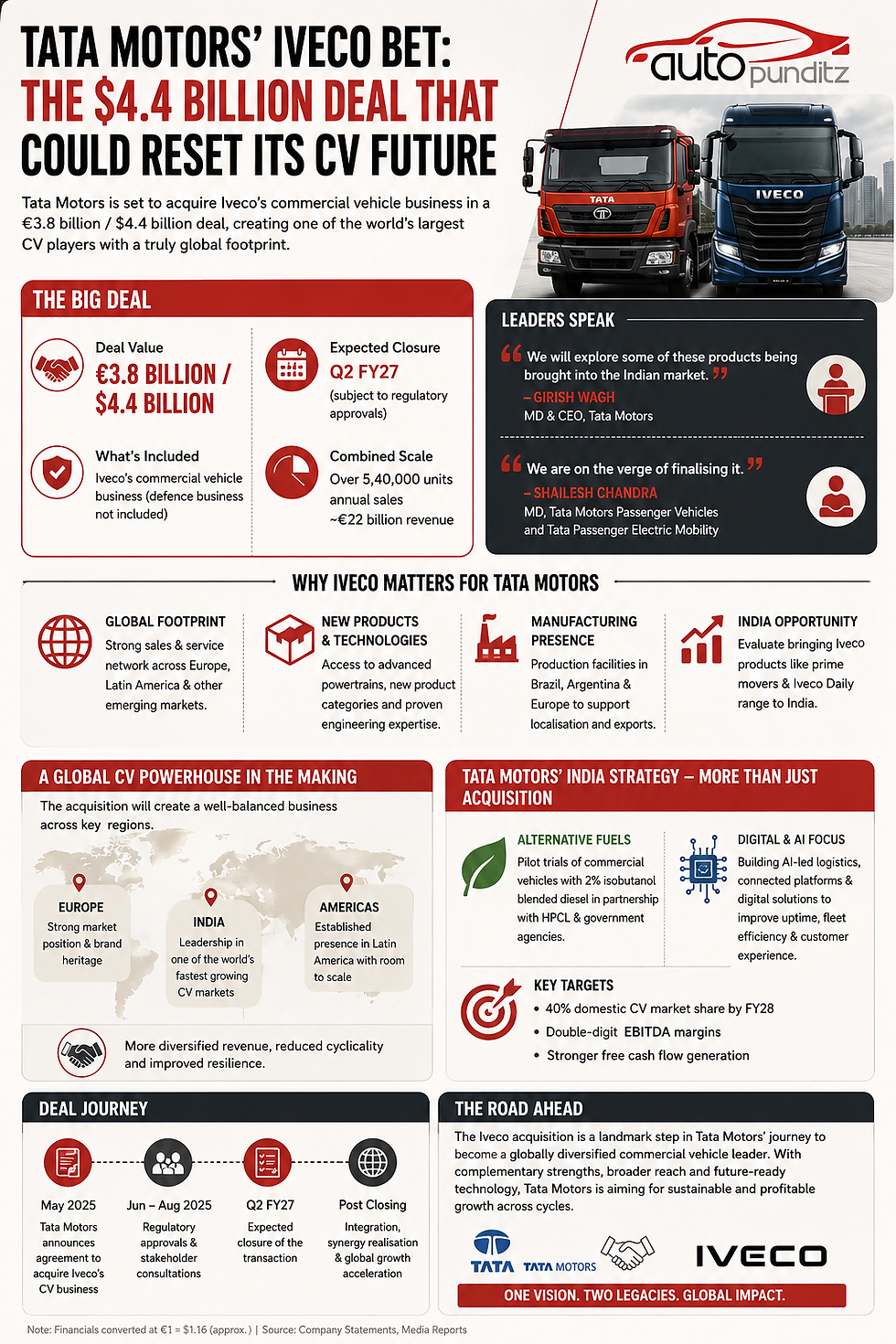
Tata Motors is preparing for its biggest commercial vehicle transformation yet, with the proposed acquisition of Iveco expected to become the centrepiece of its global growth strategy. The deal, valued at around €3.8 billion / $4.4 billion, covers Iveco’s commercial vehicle business and excludes its defence division.
Once completed, the transaction could create one of the world’s largest commercial vehicle groups, with combined annual sales of over 5.4 lakh units and revenue of around €22 billion. The merged business would have a more balanced geographic mix across Europe, India and the Americas, reducing Tata Motors’ dependence on the Indian CV cycle.
Why Iveco Matters For Tata Motors
For Tata Motors, Iveco brings three major advantages: a strong sales and service network in Europe and Latin America, access to new product categories, and manufacturing presence in markets such as Brazil and Argentina. This gives Tata Motors an opportunity to sell Tata-branded commercial vehicles through Iveco’s network while also evaluating select Iveco products for India.
Tata Motors MD & CEO Girish Wagh has indicated that the company will explore bringing some Iveco products to the Indian market, with products such as prime movers and the Iveco Daily range being possible candidates.
A Global CV Powerhouse In The Making
Tata Motors’ commercial vehicle business has traditionally been India-focused. Iveco changes that equation. The deal gives Tata access to developed markets, advanced powertrain technologies, and a broader global customer base. It could also improve sourcing efficiency and manufacturing utilisation over time.
The company is targeting a 40% domestic CV market share by FY28, along with double-digit EBITDA margins and stronger free cash flow.
India Strategy: More Than Just Acquisition
Alongside the Iveco deal, Tata Motors is also working on alternative fuel and digital initiatives. The company is preparing pilot trials of commercial vehicles running on diesel blended with 2% isobutanol, in partnership with HPCL and government agencies.
The company is also strengthening AI-led logistics, connected vehicle platforms and digital businesses to improve uptime, fleet efficiency and customer stickiness.
The Road Ahead
The Iveco acquisition is now expected to close by Q2 FY27, subject to final regulatory approvals.
For Tata Motors, this is not merely a volume expansion. It is a strategic attempt to move from being India’s leading CV player to becoming a globally diversified commercial vehicle powerhouse. If integration is handled well, Iveco could give Tata Motors the global scale that Jaguar Land Rover once gave its passenger vehicle ambitions.


